Conferences and writing don’t mix. For me, at least. The past month has been active with conferences from HR to robotics to startups in general. It should come as no surprise that AI was a big theme across everything. Although how it’s applied in robotics and what it means in HR is obviously different.
HR Tech 2024
This is my third HR Tech, and first time attending George LaRocque’s Investor Summit. The investor summit is a set-aside conference that makes it easy for investors and startups that raising to connect. It made for a more focused event. For investors and startups raising, it’s a recommended option.
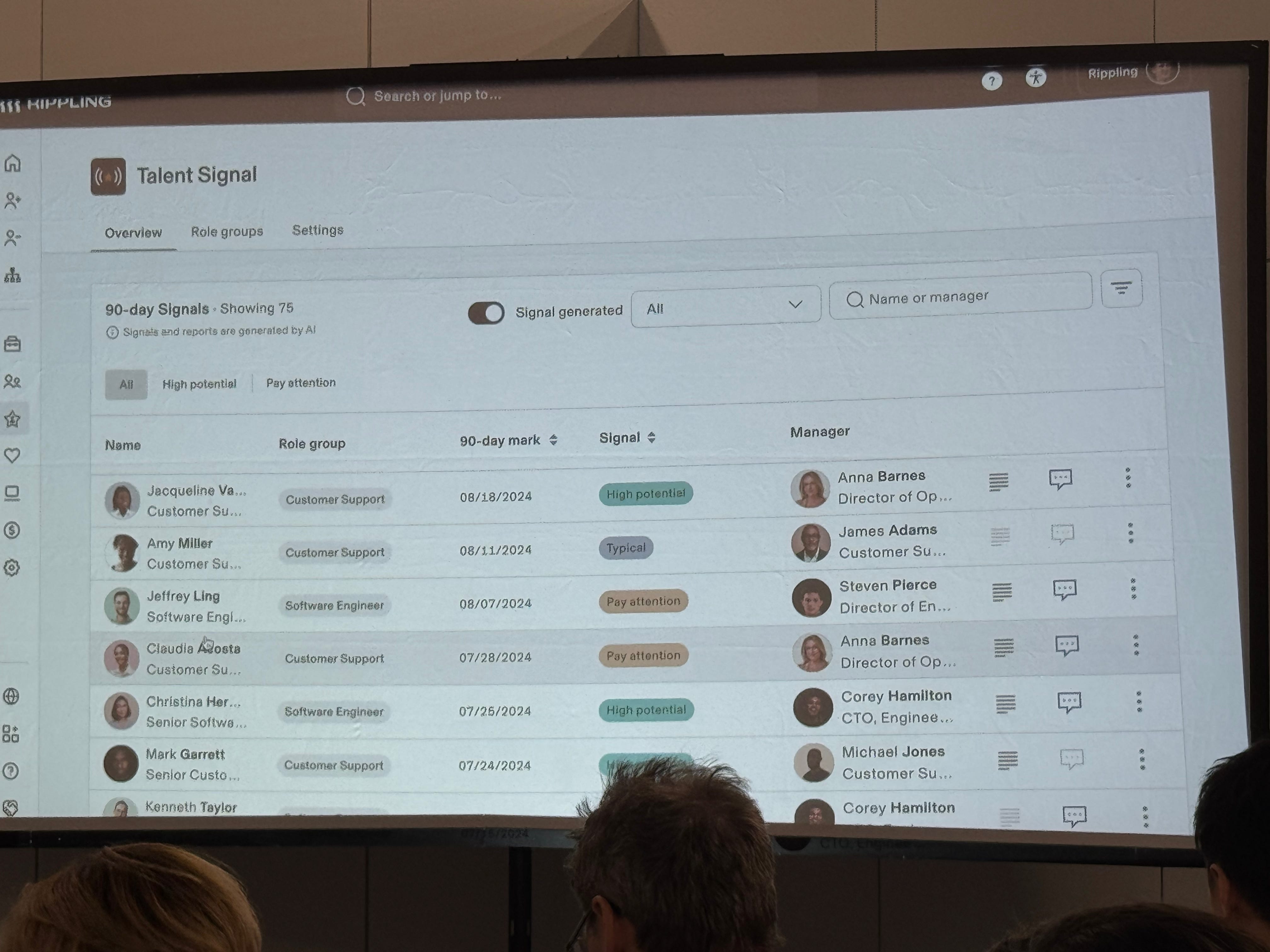
Rippling Talent Signal
Rippling Talent Signal was announced during HR Tech, and it struck me as a particularly thoughtful and novel application of Gen AI. Talent Signal provides a ‘signal’ to hiring managers about employee performance 90 days after being hired. It is meant to highlight employees who might otherwise fly under the radar. What stood out was not the 90 day ‘signal’, but how it was done.
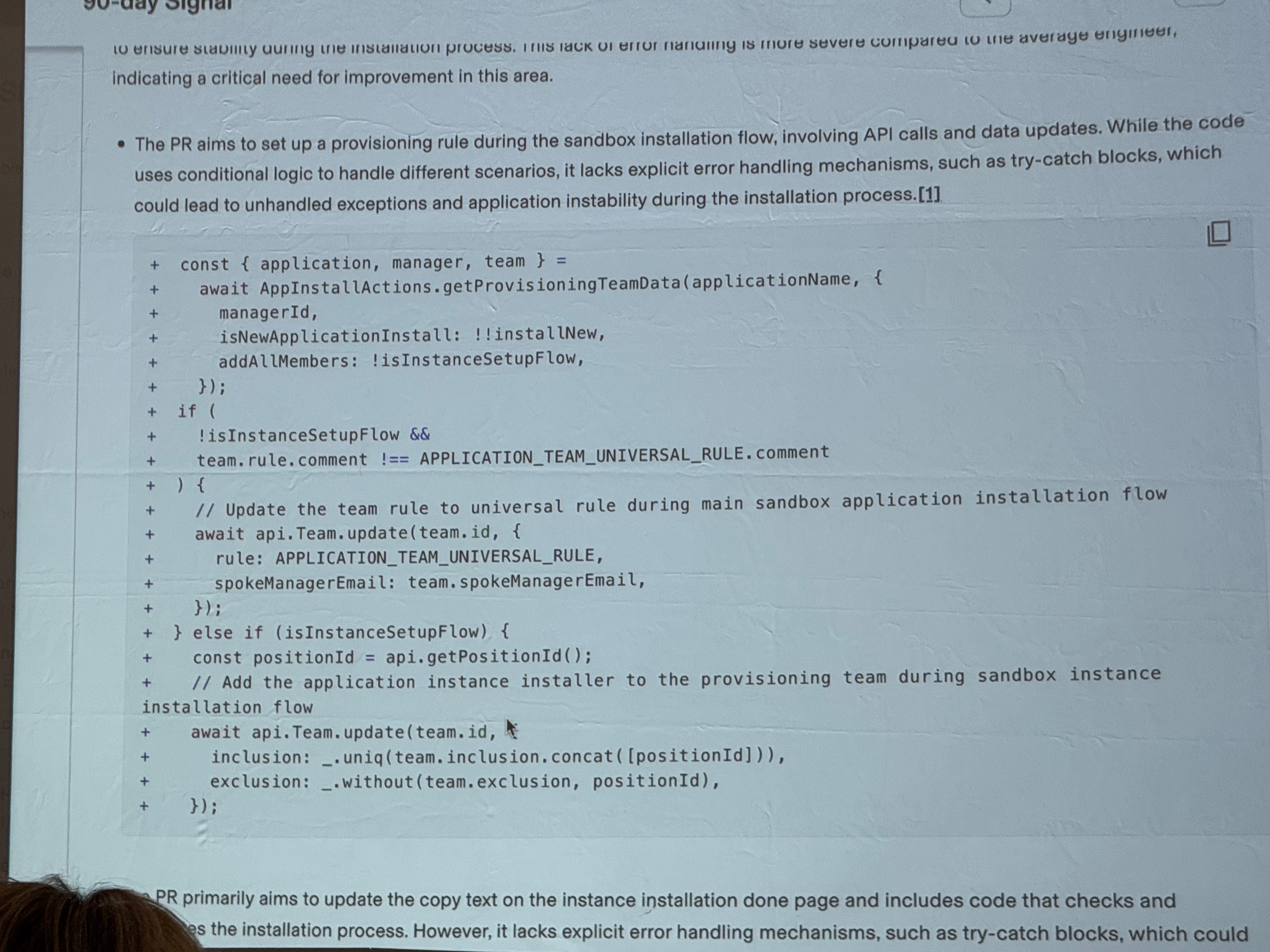
Talent Signal connects into Github, Salesforce, Zendesk, etc and analyzes work output, providing qualitative and quantitative assessments of performance. Talent signal pulls examples to support performance and provides insights as to why that sample was pulled. It does what a manager would do, but automates the process. I could see it leading to more thorough reviews for employees.
Talent Signal’s Employee Score
Github qualitative review of code
AI Interviewing
AI-assisted interviewing is an active field. I think I saw 15+ companies offering AI interview capabilities. This is when, effectively, a one way interview is conducted by AI, either through chat, voice, or an avatar. Not only were emerging startups offering these products, but existing players were adding these capabilities, as well.
The barriers to adding this offering feels low, especially because it is interesting! It’s easy for me to see developers at an existing company wanting to build these tools. If the product is any good, getting existing customers to demo it is likely easy, too. At least, right now.
Skills
The interest in skills-based hiring continues. To help with this, companies need to know their existing skills and skills taxonomy. This was another category where, when I turned around, I noticed a plethora of skills-based offerings. The challenge I see here is that the taxonomies are often based on the same data sets (ONET + Github + Research Profiles + something else), and skills alone aren’t actionable. They need to be paired together with some type of action: reskilling or workforce planning.
SF Tech Week - ‘AI in HR' with Indeed & Reach
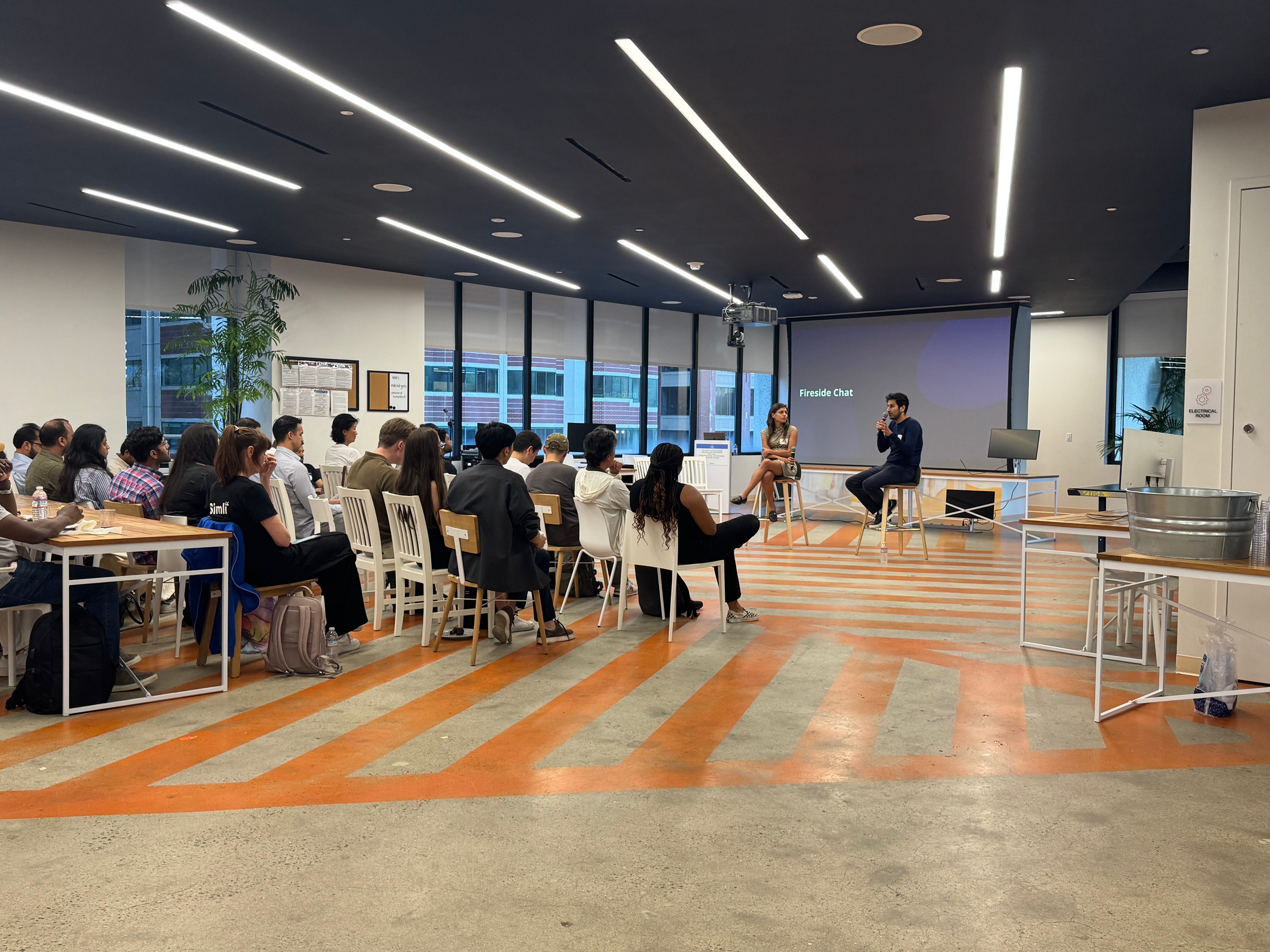
The Indeed Investment team partnered with Reach Capital, and put on an ‘AI in HR: Agents’ themed session. We were fortunate to have a great fireside chat between Reach Capital Partner, Jomayra Herrera, and Workera.ai, CEO, Kian Katanforoosh. Kian is an adjunct lecturer at Stanford where he co-created Stanford’s deep learning class with Professor Andrew Ng.
The session provided great insights about AI’s application in the enterprise, generally, and hiring in particular.
Picture of the Fireside chat at Indeed’s SF office
Paradox
I was fortunate to attend an excellent ‘Client Board’ event from Paradox.ai, an Indeed portfolio company. What came through was how thoughtful the Paradox team was about solving the pain points of its customers, and how that was appreciated by those customers.
Paradox strikes a great balance between solving the known pain points of today while focusing on innovation to bring a solution its clients weren’t expecting, but that they love. Lots of fantastic conversations.
RoboBusiness
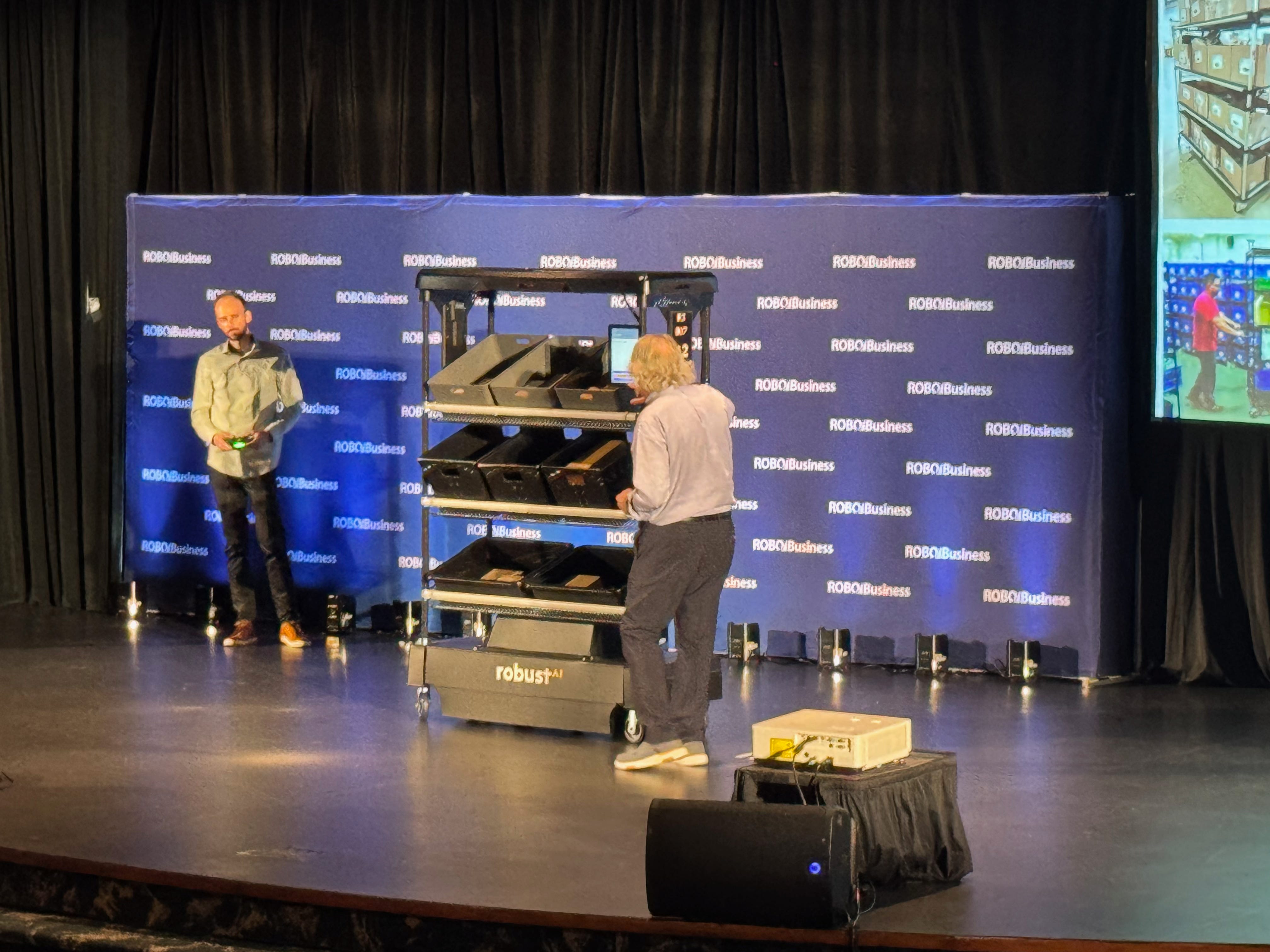
My third RoboBusiness conference as well. I particularly enjoyed the opening keynote from Rodney Brooks, co-founder of iRobot and longtime roboticist. Rodney demoed the Carter Pro robot, which was announced that day. It’s an intriguing collaborative robot designed to reduce fatigue, enable a wider array of people to work in logistics, and improve efficiency.
Rodney approached the opening keynote with a, perhaps, contrarian perspective — the robot revolution is not right around the corner. Rodney estimated the time it takes to come from lab-ready robot demo to scaled solution is about… 40 years.
He then provided examples with autonomous mobile robots and autonomous driving. In discussions with others in the robot field, it definitely evoked some stronger passion. Especially in those that are ardent believers of deep learning, simulations, and the coming revolution.
Rodney Brooks demoing the Carter Pro at the RoboBusiness conference
Conference season is almost over!
Conferences are an excellent way to connect with a large number of people and see emerging trends, but harder to write. With conference season abating, and earnings season picking up, I’ll have a few posts looking at the dynamics of earnings across staffing, payroll, and some select robotics companies.