It’s easy to dismiss Meta’s latest foray into jobs. Facebook first launched job listings in 2017, expanded to 40 countries the next year, and then shut down the product in 2023. What’s changed in two years to make this attempt more successful?
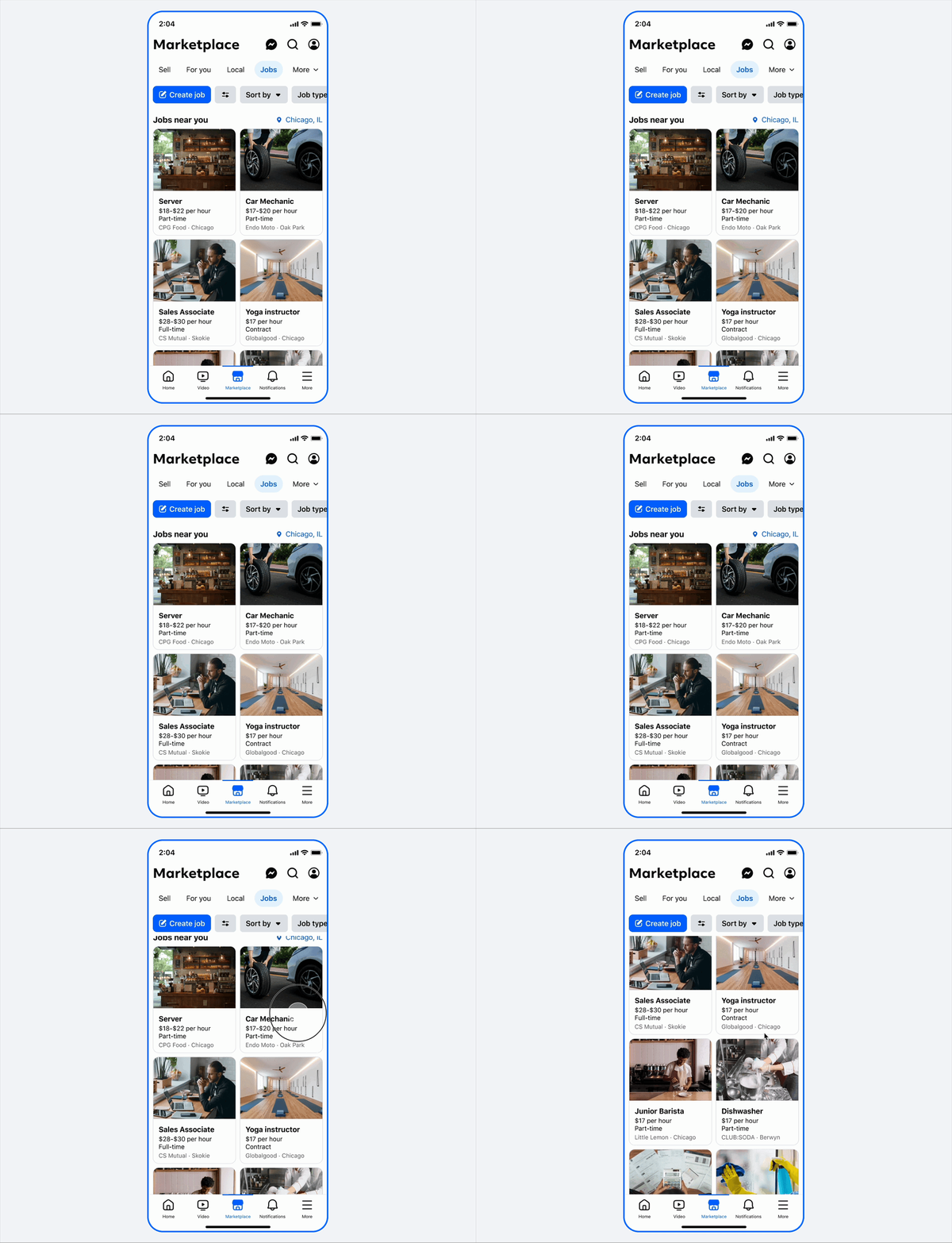
The key difference: Meta is targeting an underserved market segment
Instead of competing broadly with LinkedIn and Indeed as it did before, Meta is focusing exclusively on local, entry-level, trade, and service jobs—a space that is underserved. By prioritizing these roles, Facebook aims to differentiate itself from LinkedIn, which caters to knowledge work positions, and job boards that serve national clients (at the expense of small businesses).
The Opportunity: A Market Stuck with Help Wanted Signs
Visit any local business and ask how they hire. The answer won’t be Indeed or LinkedIn—it’s “Help Wanted” signs and Craigslist.
Meta has the right pieces: local businesses and local users. Over 200 million businesses—mostly small and medium-sized—actively use Meta’s apps every month. In the U.S. alone, more than one in three small businesses use Facebook Marketplace to sell products. These same businesses already maintain Facebook Pages and interact with customers through Messenger. More than 1 billion people message a business account via Meta’s platforms every week.
Meta’s advantages over local job competitors
1. A huge user base
Facebook Marketplace alone has over 300 million U.S. users, with the largest segment being 25–34 year-olds (about 30% of users).
2. Jobs will get promoted in the highly used Facebook Marketplace
Unlike the previous standalone Jobs feature that users had to deliberately seek out, job listings now appear within Facebook Marketplace (which reaches 1.1 billion monthly users globally), relevant Facebook Groups, and business Pages. Users can see local job posts while looking through Facebook Marketplace.
Local job hiring already happens organically through Facebook groups; this just productizes existing behavior.
3. Free to post
Meta is offering free job postings supported by ads. For small businesses already stretched thin, this is advantage compared to Craigslist.
4. Built-in messaging and AI brings recruitment automation
Job seekers can apply through Messenger to ask questions or schedule interviews. Think free, built-in, recruiting automation. For small businesses that already use Facebook messenger, this is a win.
Why does Facebook have an opportunity at all, though?
Why Craigslist and Help Wanted Signs Still Work
After decades of the internet, Craigslist, and local job boards, why hasn’t anyone effectively solved this space?
Two competing forces create a bad product experience:
Small businesses get too many, unqualified applicants: Post a job on a traditional board, and you get hundreds of applicants. Many not actually in the right area. Sorting through hundreds of unqualified applications is worse than having no applicants at all. This drives local businesses away from job boards entirely.
Sophisticated employers gum up the system: Hyper-local search doesn’t serve the job board’s business model. Limiting results to a tight commute radius means fewer jobs shown to users. This means fewer job impressions and, importantly, fewer ad impressions. Instead, job boards expand the ‘search radius’ showing more, but less targeted, jobs to users.
Meanwhile, sophisticated national employers like retail chains want to flood multiple zip codes with postings, even when stores aren’t in those exact locations. This helps those employers reach all available candidates, but it creates a poor experience for job seekers. Job seekers see the same job over and over again, just with a different zip code. Employer-focused boards tolerate the spam. Job-seeker-focused boards tried to fight it but struggled to make the economics work. Spam from employers isn’t the only problem though.
The Spam Problem: Meta’s Biggest Risk
Meta’s free model creates a serious problem. It’s easy to spam. The company’s first job listings effort was plagued by spam and scams. It’s not just a jobs problem. Currently, over 62% of Facebook Marketplace users have encountered scams on the platform. Free postings plus AI-generated content could make this even worse.
Job seekers are already skeptical of spam and scams on job boards, preferring to apply directly through company applicant tracking systems. Many local businesses lack an ATS, making users even more concerned about these issues.
The Path Forward
Facebook’s original Jobs feature never made progress against LinkedIn, and it was shut down during Meta’s “year of efficiency”. Meta’s narrow focus on an underserved market, combined with its advantages in the space, could work.
If Facebook can successfully integrate local jobs into the Marketplace product, and engage younger users, it could upend the space.